

If you are a woman over 40 navigating perimenopause or menopause, you have likely sifted through countless wellness claims searching for something that actually works. Sea moss keeps appearing in that search: in Instagram reels, on health podcasts, in Caribbean-inspired wellness circles. The promises are bold: better energy, clearer digestion, stronger immunity. But what does the evidence actually say? This article works through the science honestly, explaining how sea moss’s nutrients may genuinely support midlife wellness, where the evidence falls short, and what you need to know before adding it to your daily routine.
Table of Contents
- What makes sea moss special for women over 40?
- Thyroid, energy and mood: iodine in sea moss
- Digestive support and gut health: sea moss fibre
- Bone health, immunity and overall wellness: sea moss minerals
- Risks, precautions, and what the evidence says
- Why evidence matters more than hype: our take on sea moss for women
- Explore safe, science-backed sea moss options for women
- Frequently asked questions
Key Takeaways
| Point | Details |
|---|---|
| Supports thyroid and energy | Sea moss provides iodine, helping regulate metabolism and mood for women 40+ but requires cautious dosing. |
| Boosts gut health | Carrageenan fibre in sea moss acts as a prebiotic, reduces bloating and supports regular digestion. |
| Bone and immune benefits | Its minerals help sustain bone density, muscle function, and immunity during menopause. |
| Risks require vigilance | Evidence is mostly nutrient-driven; iodine toxicity and contamination risks mean doctor guidance is essential. |
| Choose tested products | Select lab-reviewed gels and capsules, start low, and consult with healthcare providers for safe use. |
What makes sea moss special for women over 40?
Not every natural remedy earns its place in a midlife wellness routine. Women over 40 need supplements that address real, specific concerns: flagging energy, disrupted digestion, shifting mood, and the slow erosion of bone density that menopause accelerates. Sea moss stands out because its nutrient profile speaks directly to these concerns, not just in theory, but through well-established mechanisms.
Sea moss (Chondrus crispus) is a red algae harvested along Atlantic coastlines, including the coasts of Ireland and the Caribbean. It contains over 90 minerals and trace elements. The most clinically relevant for women in midlife include iodine, magnesium, calcium, iron, zinc, potassium, and selenium. For women learning more about sea moss nutrition for women, the sheer breadth of this mineral content is genuinely striking.
Here is why those nutrients matter specifically for you:
- Iodine feeds your thyroid, which regulates your metabolism, body temperature, and mood
- Magnesium supports muscle relaxation, sleep quality, and nerve function
- Calcium helps maintain bone density at a time when oestrogen loss accelerates bone thinning
- Iron sustains energy by enabling red blood cells to carry oxygen effectively
- Zinc and selenium bolster immune defence and support hormonal balance
- Potassium helps regulate blood pressure and muscle contractions
Sea moss’s high iodine content of approximately 6.3 mg per 100g supports thyroid hormone production (T3 and T4), which directly regulates metabolism, energy, and mood. That is a meaningful mechanism for women whose thyroid function can become subtly compromised during hormonal transition.
“The mechanisms are real and well-grounded in nutritional science. What we lack are large-scale clinical trials that isolate sea moss specifically and test it against menopausal outcomes in women over 40. The nutrient science is promising; the direct clinical evidence, however, lags behind.”
It is worth understanding this distinction before diving deeper. Mechanistic support means the nutrients in sea moss can theoretically help. Clinical evidence means we have tested this in controlled trials with real women. The former exists; the latter mostly does not. Keep that in mind as we explore each area. You can also read more about Irish moss benefits and risks for a fuller picture.
Thyroid, energy and mood: iodine in sea moss
Your thyroid is not a dramatic organ until it stops working properly. For many women during perimenopause, thyroid function quietly dips, contributing to fatigue, brain fog, low mood, and weight gain. These symptoms overlap substantially with menopause itself, which makes it genuinely difficult to pinpoint the cause. Iodine is the raw material your thyroid needs to manufacture its hormones, and if you are even slightly deficient, supplementing through diet can make a meaningful difference.
Iodine in sea moss supports thyroid hormone production at levels that may benefit women over 40 experiencing subclinical iodine deficiency during perimenopause and menopause. It is not a replacement for prescribed thyroid treatment, but as a dietary source, it offers something that most Western diets lack outside of dairy and fortified foods.
The key benefits associated with adequate iodine intake include:
- Improved metabolic rate, which can support healthy weight management
- Steadier energy levels throughout the day, without stimulants
- Mood stabilisation linked to balanced thyroid output
- Reduced brain fog and improved mental clarity
- Support for healthy hair and skin, both of which can suffer during menopause
One critical caution: iodine content in sea moss is not standardised. Dried sea moss iodine content can vary wildly between 47 and 6,300 micrograms per gram depending on the harvest location, species, and processing method. That is an enormous range. Consuming a product at the high end of that scale without knowing your baseline thyroid status is a genuine risk.
Pro Tip: Before starting sea moss, ask your GP for a simple thyroid function test. Knowing your baseline TSH, T3, and T4 levels takes the guesswork out of whether iodine supplementation is appropriate for you. This is especially important if you are on levothyroxine or have a history of thyroid problems.
Women with Hashimoto’s disease, Graves’ disease, or who are on thyroid medication should avoid sea moss without explicit medical guidance. The UK Food Standards Agency has also issued cautions around excess iodine from seaweed sources. Getting more energy and wellness support is only worthwhile when it is done safely.
Digestive support and gut health: sea moss fibre
Gut health shifts considerably during menopause. Bloating becomes more frequent, bowel habits can become irregular, and the gut microbiome itself changes in response to declining oestrogen. Many women report that digestion, which was never a concern before their forties, suddenly demands attention. Sea moss offers something genuinely useful here: soluble fibre in the form of carrageenan polysaccharides.
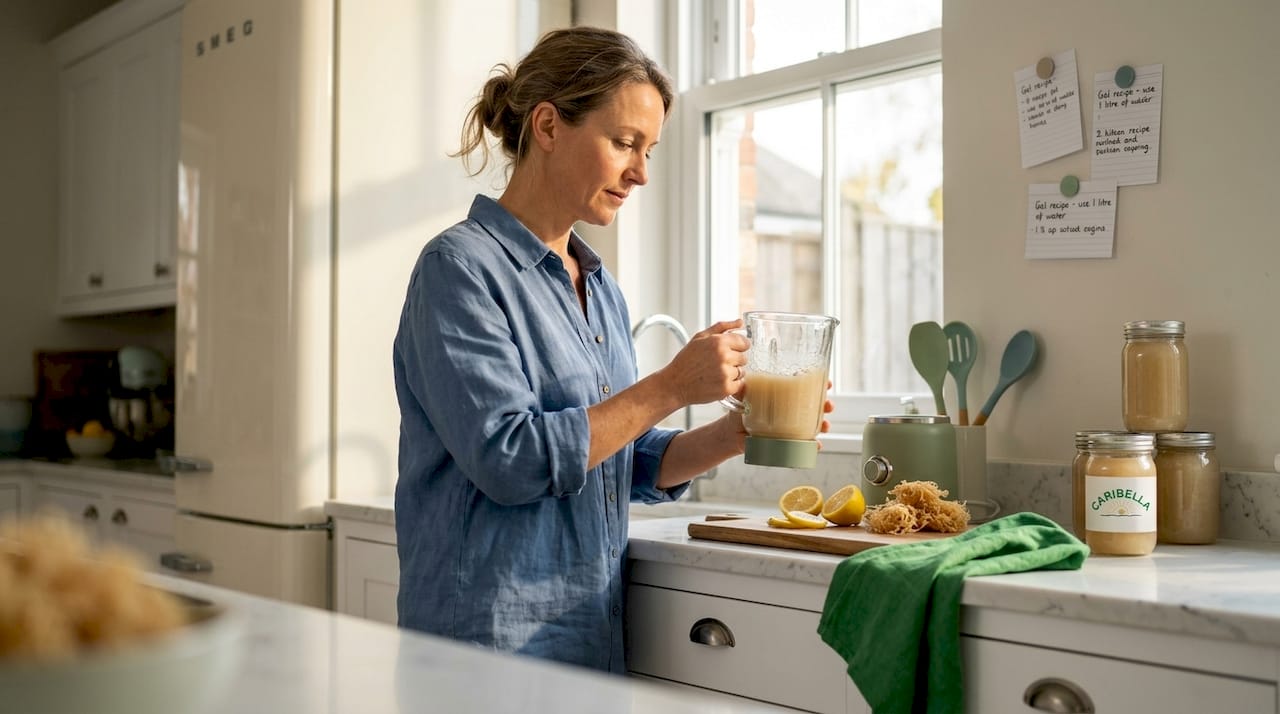
These polysaccharides act as a prebiotic, fermenting in the gut to produce short-chain fatty acids (SCFAs) like butyrate, which nourish the gut wall lining, support microbial diversity, and improve regularity. For women experiencing constipation or persistent bloating during menopause, this is a practical mechanism worth considering.
Here is how to make the most of sea moss for digestive benefit:
- Start low and go slow. Begin with one teaspoon of gel per day to allow your gut to adapt. Too much fibre introduced too quickly can worsen bloating.
- Combine with probiotic foods. Sea moss feeds good bacteria, but those bacteria need to be present first. Yoghurt, kefir, sauerkraut, and kimchi are excellent companions.
- Stay well hydrated. Soluble fibre absorbs water. Without adequate fluid intake, it can contribute to constipation rather than relieving it.
- Choose tested products. Some commercial sea moss products contain high levels of degraded carrageenan, which has been associated with gut inflammation. Look for brands that test for this distinction.
- Pair with herbal support. Complementary herbal teas for menopause can further ease bloating and support digestion naturally.
Pro Tip: If you have irritable bowel syndrome (IBS) or inflammatory bowel disease (IBD), speak to your gastroenterologist before using sea moss. Carrageenan can aggravate gut inflammation in sensitive individuals, making careful product selection essential.
For women making their own preparations, learning how to make sea moss gel at home gives you full control over the ingredients and processing, which reduces your exposure to additives.
| Digestive benefit | Mechanism | Evidence strength |
|---|---|---|
| Improved regularity | Prebiotic fibre feeding gut bacteria | Moderate (seaweed studies) |
| Reduced bloating | SCFA production, gut barrier support | Moderate (mechanistic) |
| Gut microbiome support | Fermentation of carrageenan polysaccharides | Emerging (animal and lab studies) |
| Reduced constipation | Soluble fibre bulk and water absorption | Moderate (dietary fibre evidence) |
Bone health, immunity and overall wellness: sea moss minerals
Menopause accelerates bone loss. Without oestrogen, the body becomes less efficient at absorbing calcium and retaining bone density. By the time a woman reaches her mid-fifties, she may have lost a significant proportion of her peak bone mass. This is not a minor inconvenience; it is a long-term health risk. Sea moss offers several minerals that directly address this concern.
Minerals in sea moss, including magnesium at approximately 14.4 mg per 10g serving and iron at 0.89 mg per 10g, support bone density, muscle function, oxygen transport for energy, neurotransmitter balance for mood, and immune defence through zinc and selenium. These are not trivial amounts in the context of a varied diet, though they are supplementary rather than primary sources.
Here is how each mineral contributes to your wellbeing after 40:
- Calcium works alongside vitamin D to maintain bone mineral density, slowing the accelerated loss triggered by menopause
- Magnesium is involved in over 300 enzymatic reactions, including those governing sleep, muscle relaxation, and stress regulation
- Potassium supports cardiovascular health, which becomes increasingly important as oestrogen’s protective effects diminish
- Iron enables haemoglobin to carry oxygen efficiently, underpinning energy and cognitive performance
- Zinc supports wound healing, skin health, and the immune response to infection
- Selenium acts as an antioxidant and supports thyroid enzyme function, complementing the iodine content
Explore the full sea moss mineral profile to understand the quantities involved relative to your recommended daily intake.
| Mineral | Sea moss (per 10g) | Key benefit for women 40+ |
|---|---|---|
| Magnesium | ~14.4 mg | Sleep, muscle relaxation, stress |
| Iron | ~0.89 mg | Energy, oxygen transport |
| Calcium | ~7.2 mg | Bone density maintenance |
| Zinc | ~0.19 mg | Immunity, skin, hormonal balance |
| Potassium | ~63 mg | Cardiovascular support |
You can also compare Irish moss and sea moss varieties to understand whether the species you are using is delivering the mineral profile you expect.
Risks, precautions, and what the evidence says
Honest wellness advice means naming the gaps. And there are real ones here.
No direct clinical trials on sea moss exist specifically for perimenopausal or menopausal women. The benefits described in this article are inferred from broader seaweed studies, such as a 2021 British Journal of Nutrition study showing moderate seaweed consumption improved thyroid markers in women and older adults, and from well-established nutrient mechanisms. What the field lacks are randomised controlled trials testing sea moss gel or capsules against specific menopause outcomes. That gap matters.
Excess iodine can trigger thyroid dysfunction in both directions, causing hypothyroidism or hyperthyroidism, and can worsen conditions like Hashimoto’s and Graves’ disease. Heavy metal accumulation, particularly arsenic and lead, is possible in sea moss harvested from polluted waters. Carrageenan can aggravate gut inflammation in women with IBS or IBD.
Key risks to be aware of before starting:
- Iodine toxicity from variable, unregulated iodine content in unlabelled products
- Heavy metal contamination from sea moss sourced in polluted coastal zones
- Digestive irritation in women with gut sensitivity or inflammatory conditions
- Drug interactions with thyroid medications (levothyroxine), blood thinners, and immunosuppressants
- Overclaiming on social media, where sea moss is frequently marketed as a cure for hot flushes and hormonal imbalance without clinical backing
“Promoters credit sea moss with relieving hot flushes, fatigue, and mood swings through its mineral content. Sceptics, including medical professionals cited in Northwestern Medicine and the Daily Mail, note that overhyped wellness claims without robust human trials do women a disservice by substituting marketing for medicine.”
The risks are manageable with the right approach. Review the full picture of sea moss risks and consult a safe herbal remedies workflow tailored to menopause.
| Population group | Specific risk | Recommendation |
|---|---|---|
| Women with thyroid conditions | Iodine excess worsening hypo/hyperthyroidism | Avoid without medical sign-off |
| Women on levothyroxine | Iodine interfering with medication efficacy | Consult GP before starting |
| Women with IBS/IBD | Carrageenan aggravating gut inflammation | Choose low-carrageenan tested products |
| Women with kidney disease | Excess mineral load on compromised kidneys | Avoid unless medically supervised |
Why evidence matters more than hype: our take on sea moss for women
We have watched the sea moss conversation explode online, and we feel it is important to say something that social media rarely does: this is not a miracle cure. Sea moss is a nutrient-dense food with genuinely interesting properties. But it sits in a grey zone between functional food and overhyped supplement, and that distinction matters enormously for women over 40 who deserve straight answers.
Our perspective, grounded in what we know about Caribbean wellness traditions and what modern nutritional science actually confirms, is this: sea moss can play a useful supporting role in a midlife wellness routine, but only when used intelligently. That means knowing your thyroid status before you start. It means choosing products that have been independently tested for iodine content and heavy metals. It means treating sea moss as one element in a broader approach, alongside physical activity, sleep, stress management, and potentially medical support.
The uncomfortable truth is that many products sold as “sea moss gel” or “sea moss capsules” online carry no standardised labelling, no third-party testing, and no clear iodine content declaration. Buying those products is not cautious supplementation. It is a gamble.
Women over 40 are not naive. You have navigated hormonal changes, life transitions, and a healthcare system that has historically under-researched menopause. You do not need breathless wellness marketing. You need honest information and products you can trust. Pairing sea moss with menopause wellbeing teas and transparent sourcing is a far smarter route than chasing viral trends.
Pro Tip: Never start sea moss without first checking your thyroid status. A simple blood test is all it takes to make an informed choice rather than an impulsive one.
Explore safe, science-backed sea moss options for women
Navigating sea moss safely means choosing products that are transparent about what is inside them.
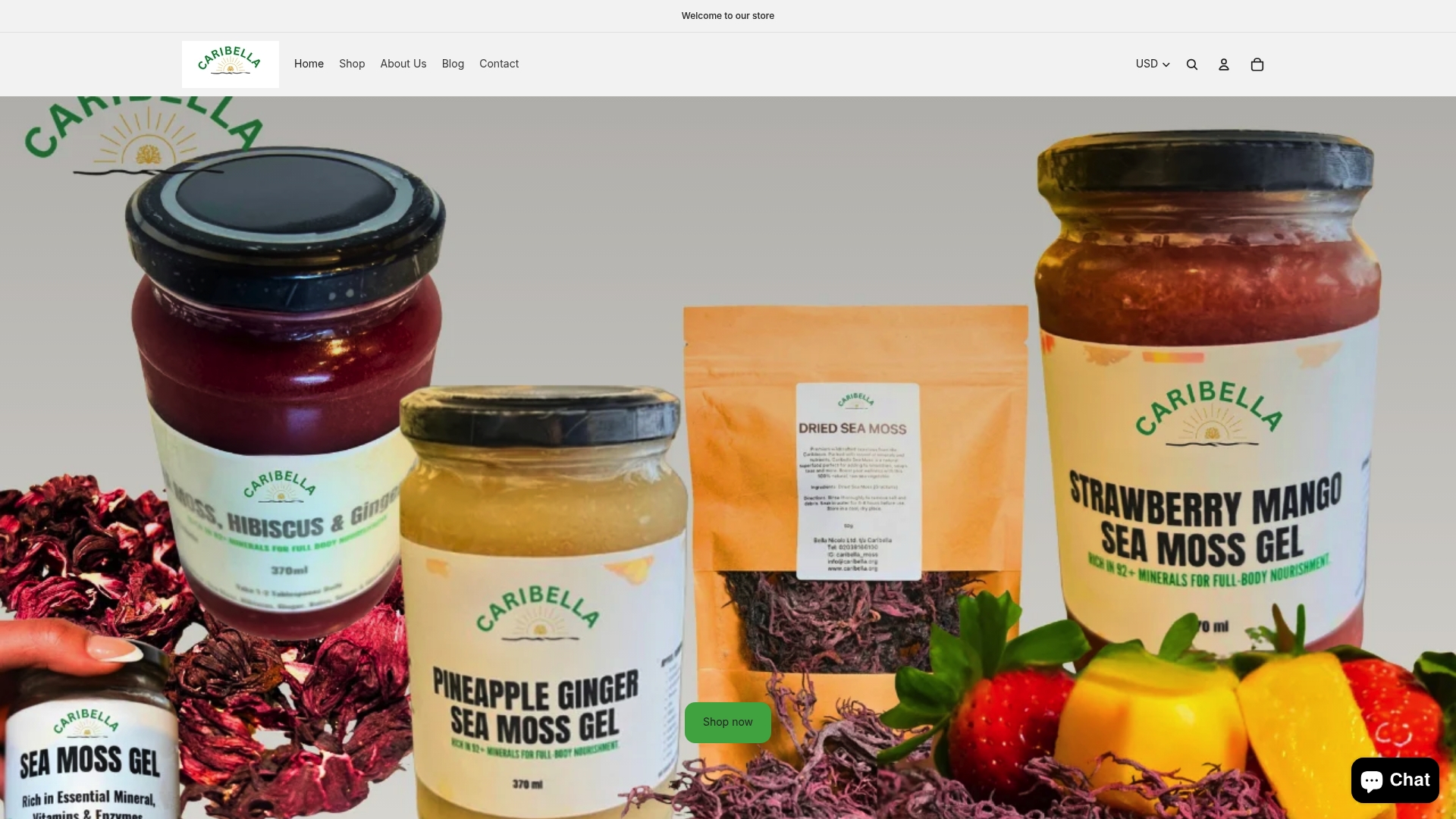
At Caribella, we offer sea moss gels made with carefully selected ingredients and inspired by Caribbean wellness traditions. Our sea moss capsules are designed for convenience and consistent dosing, taking the guesswork out of how much you are consuming daily. We also offer herbal teas formulated to complement sea moss and support digestion, energy, and immunity during menopause. Every product reflects our commitment to plant-based, honest wellness for women who want solutions they can trust, not trends they have to decode.
Frequently asked questions
Can sea moss help with menopause symptoms?
Sea moss offers minerals and fibre that may support energy, mood, and digestion during menopause, but direct clinical evidence for specific symptom relief is sparse and benefits are mainly inferred from nutrient mechanisms.
Is sea moss safe for women with thyroid problems?
Women with Hashimoto’s, Graves’ disease, or who take thyroid medication should avoid sea moss due to iodine risks and variability, and must consult their doctor before considering it.
How much sea moss is safe daily?
Start with 1 to 2 teaspoons of gel or one capsule daily, choose independently tested products, and follow your GP’s guidance to avoid iodine overload.
Can sea moss improve gut health?
The prebiotic fibre in sea moss ferments in the gut to support beneficial bacteria, improve regularity, and reduce bloating, making it potentially useful for menopause-related digestive changes.
What are the main risks of taking sea moss?
The primary risks include iodine excess causing thyroid dysfunction, heavy metal contamination from unregulated sources, and gut irritation from carrageenan, particularly in women with IBS or IBD.