

You train consistently, eat well, and still feel like your body is working against you. Fatigue hits harder, recovery drags on, and hot flushes mid-workout are nobody’s idea of a good time. For women navigating perimenopause or menopause, the gym can feel like twice the effort for half the reward. Herbal teas, backed by a growing body of research, offer a practical, caffeine-free way to support energy and recovery without overhauling your entire routine. This guide walks you through which herbs work, how to prepare them properly, and how to track your progress safely.
Table of Contents
- Why herbal teas matter for women 40+ at the gym
- What you need: safe herbs, blends and UK guidelines
- How to make herbal teas for energy and recovery
- Practical tips, troubleshooting and progress tracking
- What most guides miss about herbal teas for active midlife women
- Discover UK herbal teas and wellness support
- Frequently asked questions
Key Takeaways
| Point | Details |
|---|---|
| Herbal teas support gym recovery | Sage, nettle and ginger blends can reduce fatigue and hot flushes for active women over 40. |
| Evidence-backed herbs work best | Choose researched herbs like ashwagandha, lemon balm and avoid unsafe or unproven options. |
| Preparation and consistency are key | Use correct amounts and steep times, track progress and give 2-8 weeks for best results. |
| Safety and synergy matter | Consult your GP for interactions and combine teas with exercise, nutrition and sleep for optimal benefit. |
Why herbal teas matter for women 40+ at the gym
Perimenopause and menopause bring a cluster of symptoms that directly affect gym performance. Hot flushes disrupt sleep, which slows muscle repair. Fatigue makes it harder to push through sessions. Joint discomfort, driven by falling oestrogen, can make even a light squat feel punishing. These are not excuses. They are real physiological changes that deserve real solutions.
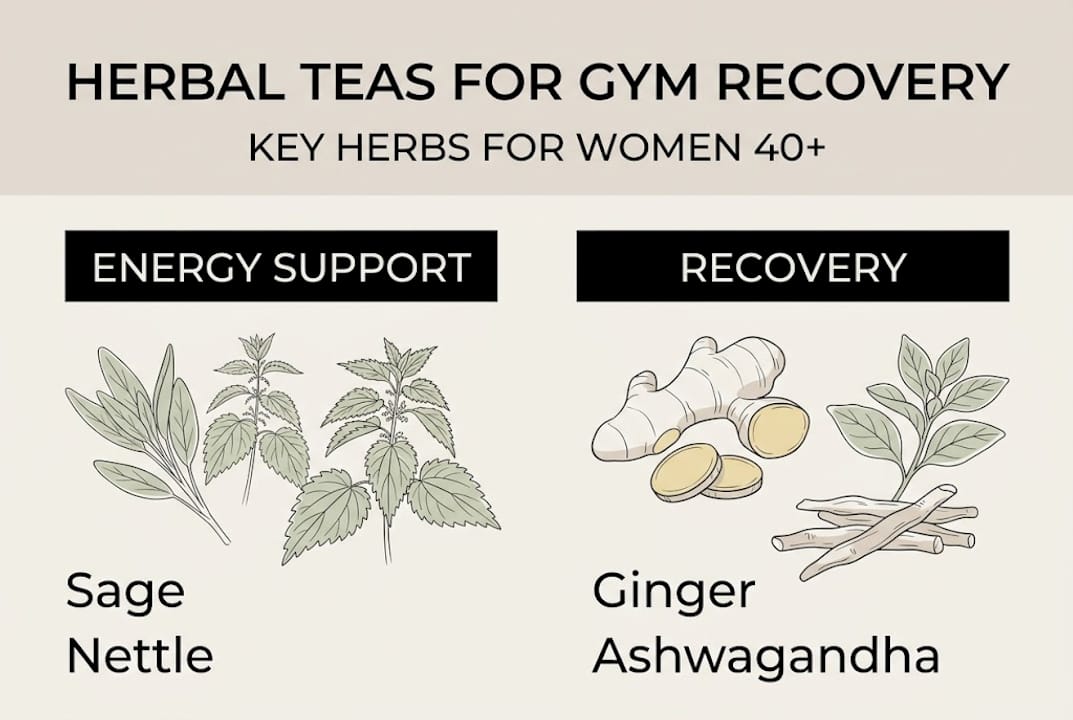
Herbal teas sit at a useful intersection: they are accessible, affordable, and increasingly well-studied. Understanding herbal tea benefits for women over 40 reveals that specific plants target specific symptoms. Sage calms vasomotor symptoms (the technical term for hot flushes and night sweats). Nettle supports adrenal function and energy levels. Ginger eases joint inflammation. Ashwagandha, an adaptogen, helps the body manage stress hormones that spike during hormonal transition.
The numbers are striking. Sage reduces hot flushes by 64% over eight weeks in clinical settings. That is not a minor improvement. For a woman waking three times a night drenched in sweat, that kind of reduction changes everything, including how she performs the next morning at 6am.
Here is what these key herbs bring to your routine:
- Sage: Reduces frequency and intensity of hot flushes
- Nettle: Boosts adrenal and energy function naturally
- Ginger: Eases joint discomfort and post-workout inflammation
- Ashwagandha: Lowers cortisol and supports recovery
- Lemon balm: Calms the nervous system for better sleep
Importantly, herbal teas are not a replacement for NHS menopause guidance or HRT if that is what your GP recommends. They work best as part of a broader approach alongside quality sleep, strength training, and a protein-rich diet. Think of them as a daily ritual that fills in the gaps, not a standalone fix.
“Adaptogenic herbs offer cumulative, gentle support, making them particularly well-suited to the sustained demands of midlife fitness.”
The absence of caffeine is also worth noting. Unlike pre-workout drinks or strong coffee, herbal teas support energy through hormonal and adrenal pathways rather than stimulating the central nervous system. No crash. No jitteriness. Just steadier energy across the day.
What you need: safe herbs, blends and UK guidelines
Not all herbs are created equal, and in the UK, the Traditional Herbal Registration (THR) scheme exists precisely to protect you. THR-marked products have been assessed for quality and safety by the Medicines and Healthcare products Regulatory Agency (MHRA). When you are buying herbs for therapeutic use, look for that mark on the packaging.
Here is a quick reference for the most useful herbs, covering their purpose, suggested dose and key safety notes:
| Herb | Primary benefit | Suggested dose | Safety notes |
|---|---|---|---|
| Sage | Reduces hot flushes | 1 tsp dried leaf/250ml | Avoid in pregnancy |
| Nettle | Energy, iron support | 1 tsp dried leaf/250ml | Generally safe |
| Ginger | Joint and gut support | 1 tsp fresh/dried/250ml | Avoid high doses with blood thinners |
| Ashwagandha | Stress, cortisol, recovery | 300-600mg or 1 tsp/250ml | Consult GP if on thyroid meds |
| Lemon balm | Sleep, calm | 1 tsp dried/250ml | Generally safe |
| Red clover | Phytoestrogens, bone support | As directed on THR product | Avoid with breast cancer history |
| Raspberry leaf | Uterine tone | 1 tsp/250ml | Avoid in pregnancy |
For energy, a morning blend of sage, nettle and ginger works well. For evening recovery, ashwagandha and lemon balm are your allies. You can find herbal teas selection that combine these thoughtfully for convenience.
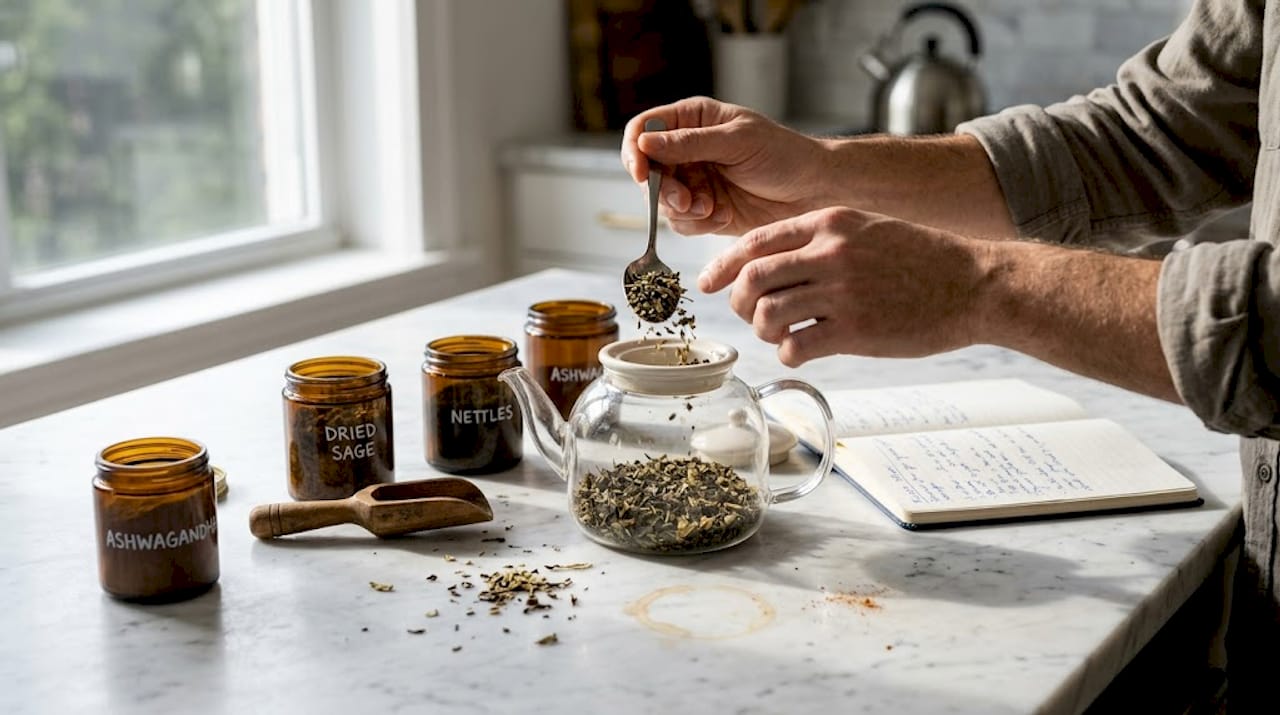
The effective herbs for menopause include sage, nettle, ginger and ashwagandha, all of which are widely available in the UK. However, two herbs to approach with real caution are black cohosh and St John’s Wort. Both carry significant risks, including interactions with HRT and contraindications for women with a breast cancer history. Stick to THR-registered options and always check with your GP if you are on any prescribed medication.
For a broader view of what the evidence supports, the complementary menopause therapies factsheet from Women’s Health Concern is an excellent UK-specific resource.
Pro Tip: Buy loose dried herbs from a reputable UK supplier with THR registration rather than supermarket teabags, which often contain insufficient quantities of the active herb to be effective.
How to make herbal teas for energy and recovery
Preparation matters more than most people realise. Get it wrong and you are drinking flavoured water. Get it right and you are extracting the volatile oils and active compounds that actually do the work.
Here is a straightforward step-by-step process:
- Measure correctly. Use 1 tsp dried herb per 250ml of water. For fresh herbs, double the quantity.
- Check your water temperature. Boiling water (100°C) can destroy delicate volatile oils in herbs like sage and lemon balm. Aim for 85-95°C, or let boiled water sit for two minutes.
- Cover the cup. Place a small saucer or lid over your mug while steeping. This traps the beneficial essential oils that would otherwise evaporate.
- Steep for the right time. Leafy herbs like nettle and lemon balm need 5-7 minutes. Roots and tougher material like ginger need 10-15 minutes.
- Strain and drink promptly. Oversteeping can make teas bitter and increase tannin content, which can inhibit iron absorption.
Timing your teas strategically makes a real difference:
| Tea type | Best timing | Key herbs |
|---|---|---|
| Energy infusion | Morning or pre-workout | Sage, nettle, ginger |
| Recovery blend | Within 30 mins post-workout | Ashwagandha, lemon balm |
| Sleep support | 60-90 mins before bed | Lemon balm, chamomile |
For a herbal tea energy guide tailored specifically to women over 40, the timing and blend combinations are worth exploring in more detail.
Pro Tip: Batch-brew your morning energy blend the night before and store it in the fridge. Drink it cold or at room temperature post-workout. It saves time and keeps the beneficial compounds intact for up to 24 hours.
Practical tips, troubleshooting and progress tracking
Starting with herbal teas is simple. Sticking with them long enough to see results is where most women fall short. Here is how to set yourself up for success.
Getting started checklist:
- Choose one or two herbs initially, not five at once
- Start with a lower dose (half a teaspoon) for the first week
- Keep a simple daily log: energy score out of 10, sleep quality, hot flush frequency
- Drink consistently, ideally at the same time each day
- Review your log at two weeks and four weeks
Common mistakes that reduce effectiveness:
- Using boiling water directly on delicate herbs
- Oversteeping beyond 15 minutes (increases bitterness and reduces benefits)
- Jumping to high doses immediately, which can cause digestive discomfort
- Expecting overnight results and stopping too soon
The honest timeline: most women notice subtle shifts in energy and sleep within two to four weeks of consistent use. Clearer symptom relief, particularly with hot flushes, typically emerges at six to eight weeks. Patience is not optional here.
Pairing your teas with the right lifestyle habits accelerates results. Strength training two to three times a week supports bone density and metabolism. A diet rich in protein (at least 1.2g per kg of body weight) aids muscle repair. The broader evidence on tea for menopause consistently shows that herbs work best as part of this kind of integrated approach.
For a broader view of how herbal tea benefits stack up when combined with lifestyle changes, the evidence is genuinely encouraging.
“Herbal teas are not magic. They are consistent, cumulative support that rewards the women who show up for themselves every day.”
Stop and consult your GP if you experience skin reactions, digestive upset that persists beyond a week, or any unusual symptoms after starting a new herb. Your safety always comes first.
Pro Tip: Take a photo of your herb packaging and note the batch number. If you ever react to a product, this makes it far easier to report and trace the issue.
What most guides miss about herbal teas for active midlife women
Most articles on herbal teas for menopause focus on symptom relief in isolation. What they rarely address is how much harder herbs have to work when your lifestyle is not supporting them.
If you are training hard, sleeping poorly, and eating insufficient protein, no herb on earth will fully compensate. Ashwagandha can lower cortisol, but if your cortisol is sky-high because you are chronically under-recovered, the herb is fighting a losing battle. The teas are one tool in a toolkit, not the whole toolkit.
We also think the ‘miracle herb’ narrative does real harm. Genuine benefits from herbs like sage and ashwagandha are real but modest and cumulative. They build over weeks, not days. Women who understand this stick with their routine. Women chasing dramatic overnight results give up before the benefits arrive.
Finally, the UK regulatory context matters. Choosing THR-marked products is not bureaucratic box-ticking. It is how you protect yourself from underdosed, contaminated, or mislabelled products. And if you are on HRT or managing a health condition, please read about risks for women over 40 before adding new herbs to your routine. A conversation with your GP costs nothing and could prevent a real problem.
Discover UK herbal teas and wellness support
If you are ready to add well-formulated herbal teas to your gym recovery routine, Caribella has blends designed with women over 40 in mind.
Our UK herbal teas use carefully selected, quality-sourced ingredients with UK shipping as standard. The women’s wellness tea is formulated to support hormone balance and recovery, making it a natural fit for your post-workout ritual. For women who want broader hormonal support, our wellness capsules offer a convenient complement to your daily tea routine. Inspired by Caribbean plant traditions and built for the realities of midlife fitness, these are products we stand behind completely.
Frequently asked questions
Which herbal teas help most for energy and recovery after the gym?
Sage, nettle, ginger, and ashwagandha are the best-researched options for boosting energy, reducing fatigue, and supporting hormone balance in menopausal women. A morning blend of the first three and an evening ashwagandha brew covers both bases well.
How quickly will I notice results from herbal teas?
Most women notice subtle improvements within two to four weeks, with more significant relief after six to eight weeks of daily use. In clinical trials, sage cut hot flushes by 64% over eight weeks, which gives a realistic benchmark for expectations.
Are there any safety concerns with herbal teas for menopause or gym use?
Yes. Black cohosh and St John’s Wort carry significant risks for menopausal women, particularly those on HRT or with a breast cancer history. Always choose THR-registered products and speak to your GP before starting if you are on any medication.
Are herbal teas a substitute for HRT or other medications?
No. Herbal teas are not a substitute for HRT or prescribed treatment. They are a complementary approach that can support your overall wellbeing alongside medical care, not instead of it.
Can I use herbal teas with protein or recovery drinks after workouts?
Absolutely. Adaptogenic blends like ashwagandha pair well with post-workout nutrition and protein-rich recovery drinks, offering calm, sustained support without the caffeine crash of conventional pre-workout supplements.
Recommended
- Herbal tea for energy: a guide for women over 40 – Caribella
- Herbal tea benefits: a guide for women over 40 – Caribella
- Herbal teas for menopause: evidence and top options – Caribella
- Women’s Wellness Tea | Hormone Balance, Menopause & Cycle Support | Caribella
- Хранителни добавки за жени над 30: пълен наръчник: науката зад избора
- Regeneration nach dem Sport » Erholung für die Muskeln ✓ – FITTASTE