

For women navigating perimenopause and menopause, herbal supplements seem to be everywhere. Friends recommend them, social media promotes them, and health food shops stock entire walls of them. Yet for every woman who swears by black cohosh, another finds no relief at all. The reality is that the evidence is patchy, the regulation is complex, and ‘natural’ does not automatically mean safe. This guide cuts through the noise to give you a clear, honest picture of what herbal supplements are, how they are regulated in the UK, what the clinical evidence actually shows, and how to use them wisely if you choose to.
Table of Contents
- What are herbal supplements and how are they used?
- How are herbal supplements regulated and marked for safety in the UK?
- Evidence: do herbal supplements actually help with menopause?
- Risks, interactions and safe use: what women 40+ need to know
- Our take: why smart scepticism is essential for herbal supplements
- Explore herbal solutions for women’s wellness
- Frequently asked questions
Key Takeaways
| Point | Details |
|---|---|
| Definition and forms | Herbal supplements are plant-based products in forms like teas, capsules, and powders for health purposes. |
| UK regulation | Look for the THR mark to ensure products meet UK quality and safety standards, but remember it does not prove effectiveness. |
| Evidence gaps | Clinical trials show mixed results, and many supplements do not outperform placebo for menopausal symptoms. |
| Safety first | Herbal supplements may interact with medicines and are unsuitable for some women; always consult a healthcare professional. |
| Informed choices | Balancing traditional wisdom and clinical evidence helps women 40+ make safer, more effective decisions about supplements. |
What are herbal supplements and how are they used?
Herbal supplements are plant-based health products derived from leaves, roots, flowers, seeds, or bark. They are taken with the intention of supporting health, rather than treating a diagnosed medical condition in the way a prescription drug would. That distinction matters enormously, and we will come back to it.
You will find herbal supplements in several forms:
- Capsules and tablets: Concentrated plant extracts pressed into an easy-to-swallow format
- Loose-leaf and bagged teas: One of the most accessible and gentle starting points for exploring plant-based wellness
- Tinctures: Liquid extracts, usually alcohol-based, taken in small drops
- Powders: Mixed into smoothies, yoghurts, or warm water
- Topical preparations: Creams and oils applied to the skin
For women over 40, the most common reasons for reaching for herbal supplements are:
- Hot flushes and night sweats
- Disrupted sleep and fatigue
- Mood fluctuations and low energy
- Digestive discomfort
- General immune and hormonal support
Herbal teas deserve a special mention here. They sit at the gentler end of the spectrum, making them an ideal starting point if you are curious but cautious. A well-chosen blend can support relaxation, digestion, or warmth without the higher concentrations found in capsule extracts. If you are new to this space, exploring the herbal tea benefits for women is a sensible first step.
“Just because something comes from a plant does not mean it is without risk. Equally, dismissing all herbal supplements as useless ignores centuries of traditional use. The truth, as usual, sits somewhere in between.”
The key is understanding that herbal supplements sit in a regulatory grey area in the UK. They are not foods, but they are also not medicines in the conventional sense. That positioning shapes everything from how they are tested to what claims manufacturers are allowed to make.
How are herbal supplements regulated and marked for safety in the UK?
This is where many women get caught out. It is easy to assume that if something is sold in a reputable pharmacy or health food shop, it has been rigorously tested for both safety and effectiveness. With herbal supplements, that assumption can mislead you.
In the UK, herbal supplements can be sold either as food supplements or as licensed herbal medicines. Most of what you find on the shelves falls into the food supplement category, which means they are subject to food safety rules rather than the stricter standards applied to medicines.
The most important label to understand is the THR marking, which stands for Traditional Herbal Registration. A product carrying the THR mark has met standards for quality, consistency, and safety, but the THR marking confirms quality, not that the supplement has been proven to work. That is a critical distinction.
Here is a quick comparison to make this clearer:
| Feature | THR-marked product | Licensed medicine |
|---|---|---|
| Quality standards met | Yes | Yes |
| Safety assessed | Yes | Yes |
| Efficacy (proven to work) | Not required | Required |
| Clinical trials needed | No | Yes |
| Dosage consistency | Guaranteed | Guaranteed |
When buying herbal supplements, look for:
- The THR logo on the packaging
- A product licence number (PL number)
- Clear ingredient listings with amounts per dose
- A UK or EU address for the manufacturer
Pro Tip: Before you buy any herbal supplement, take the packet to your pharmacist and ask whether it interacts with any medicines you currently take. This takes five minutes and could prevent a serious problem.
It is also worth noting that how a product is formulated matters as much as the ingredient list. Good manufacturing practice, stable extracts, and appropriate concentrations all affect whether you are getting a consistent product. Understanding what goes into health product formulation can help you ask better questions when you are shopping. Caribella’s herbal teas with quality standards are formulated with this level of care in mind, as are all products across the herbal tea range.
Evidence: do herbal supplements actually help with menopause?
Honestly? The picture is not encouraging for most of the headline herbs. But it is nuanced, and the details matter.
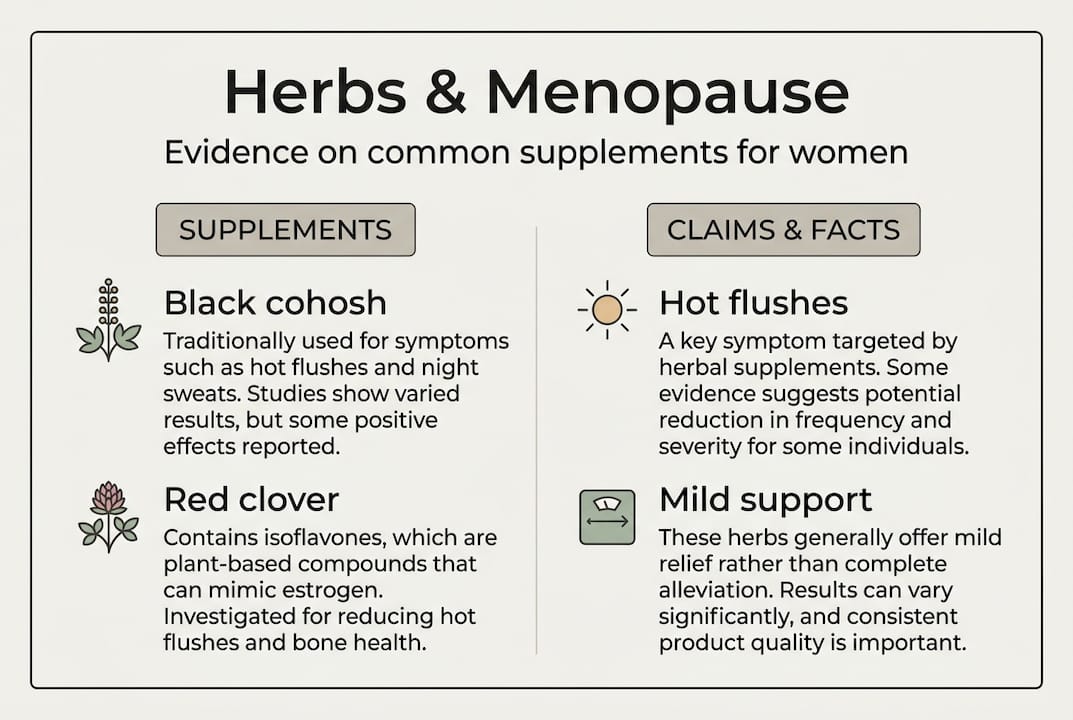
The most studied herbal supplement for menopause is black cohosh, followed by red clover and soy-based phytoestrogens. All three have been tested in randomised controlled trials (RCTs), which are the gold standard for establishing whether a treatment works.
The findings are largely sobering. RCTs show little difference from placebo for black cohosh and most other common herbal supplements when measuring hot flush frequency or severity. This means that in most trials, women given a dummy pill did just as well as those given the herbal extract.
Here is a summary of the clinical evidence for the most popular options:
| Supplement | Primary claim | RCT evidence | Verdict |
|---|---|---|---|
| Black cohosh | Reduces hot flushes | Mostly no better than placebo | Weak |
| Red clover | Hormonal balance | Inconsistent results | Weak to moderate |
| Soy phytoestrogens | Oestrogen-like effects | Mildly supportive in some studies | Variable |
| St John’s Wort | Mood support | Some evidence for low mood | Better than others |
| Valerian | Sleep improvement | Small, mixed trials | Inconclusive |
UK official guidance reflects this. NHS and BMS advise caution about herbal supplements, prioritising lifestyle changes, HRT, and non-hormonal prescription options where appropriate.
That said, phytoestrogens (plant compounds that weakly mimic oestrogen) do show some mild supportive effects in certain women, particularly those whose gut bacteria can convert them effectively. Variability between individuals is significant. What works for your colleague may do nothing for you.
For a deeper look at the research landscape, the evidence for herbal teas in menopause covers this in more detail. And if you are considering something stronger, hormone balancing capsules formulated with quality ingredients offer a more structured approach.
The four most important takeaways from the evidence:
- No herbal supplement has been proven to reliably reduce menopause symptoms across large populations
- Individual responses vary considerably and cannot always be predicted
- UK clinical guidelines do not recommend herbal supplements as a first-line treatment
- Some women do report benefit, but it is impossible to separate placebo from genuine pharmacological effect without rigorous trials
Risks, interactions and safe use: what women 40+ need to know
The safety conversation is where things get genuinely important. Natural origin does not equal harmless, and for some women, certain herbal supplements carry real risk.
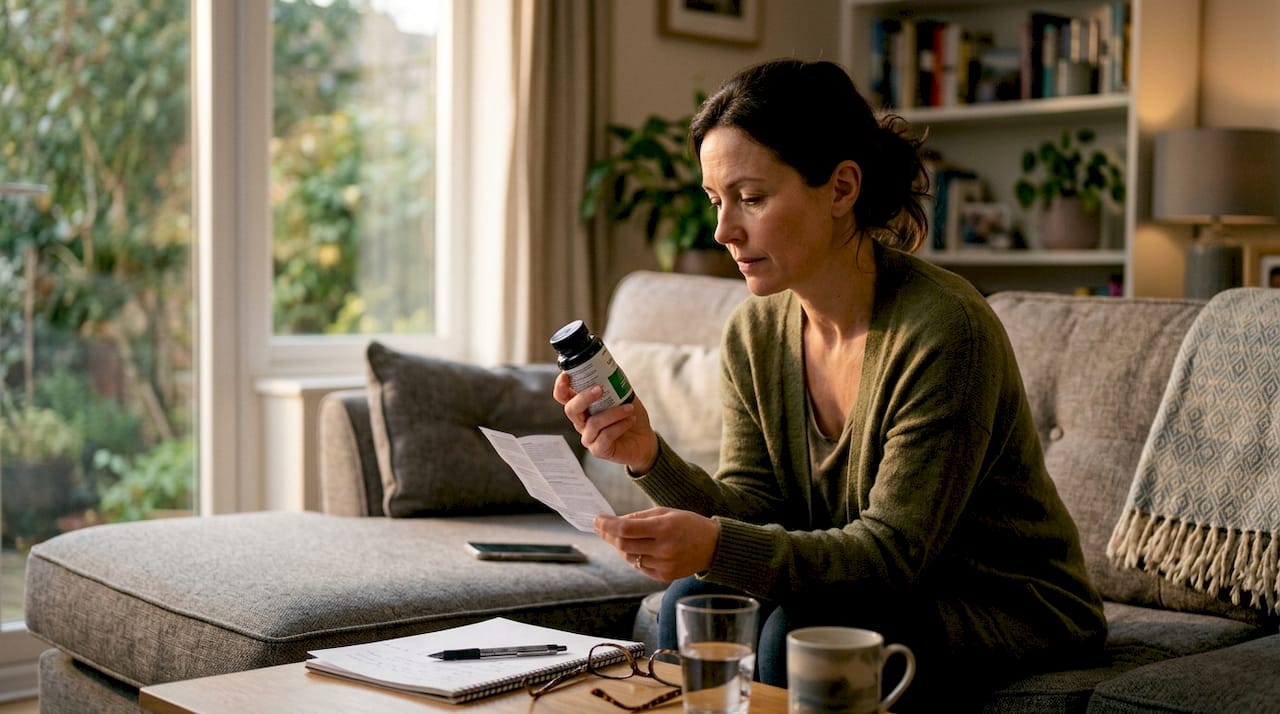
The most significant concern is drug interactions. Herbal supplements can and do interact with prescribed medicines, sometimes in serious ways. St John’s Wort, for instance, is well documented to reduce the effectiveness of antidepressants, blood thinners, and contraceptive pills. If you take any regular medication, this conversation must happen with your GP or pharmacist before you start.
Other important safety considerations:
- Liver and kidney disease: Some herbs, including black cohosh, have been associated with rare but serious liver reactions. Women with any liver or kidney condition should avoid unsupervised use
- Breast cancer history: Women who have had hormone-sensitive breast cancer should avoid phytoestrogen-containing herbs, as these may interfere with treatments such as tamoxifen
- Surgical procedures: Herbal supplements can affect bleeding and anaesthesia; always inform your surgical team of anything you are taking
- Long-term unsupervised use: Many herbs are not tested for long-term use, and their effects over months or years remain unclear
Pro Tip: Keep a written list of every supplement you take, including dosage and frequency, and share it with your GP at every appointment. This is the single most effective habit for avoiding dangerous interactions.
For women considering something like sea moss or Irish moss, it is worth understanding both the risks of herbal supplements and the benefits before starting. Working with a knowledgeable practitioner who understands supplement formulation can also help you make safer, more informed choices.
Our take: why smart scepticism is essential for herbal supplements
We believe in plant-based wellness deeply. Caribbean herbal traditions are woven into who we are as a brand. But precisely because we care, we think it would be wrong to oversell what herbal supplements can do.
The honest truth is that millions of women turn to herbs not because the science is clear, but because conventional medicine sometimes leaves them feeling unheard. That is a real problem worth acknowledging. Herbal supplements often fill an emotional and practical gap, offering a sense of agency when other options feel limited or come with unwanted side effects.
What we have seen consistently is that the best outcomes come from combining sensible lifestyle changes (sleep, nutrition, movement, stress management) with carefully chosen, quality supplements. Not as a replacement for medical advice, but as a thoughtful addition to a broader wellness plan.
Smart scepticism means asking questions, reading labels, consulting professionals, and not assuming that ‘natural’ means ‘proven.’ If you are looking for herbal supplement alternatives or simply want to understand your options better, approaching the subject with curiosity and critical thinking will serve you far better than hype in either direction.
Explore herbal solutions for women’s wellness
If this guide has helped clarify what to look for and what to question, the next step is finding products that genuinely meet quality standards. Caribella was built around exactly this principle: that plant-based wellness should be both grounded in tradition and held to high standards of quality and transparency.
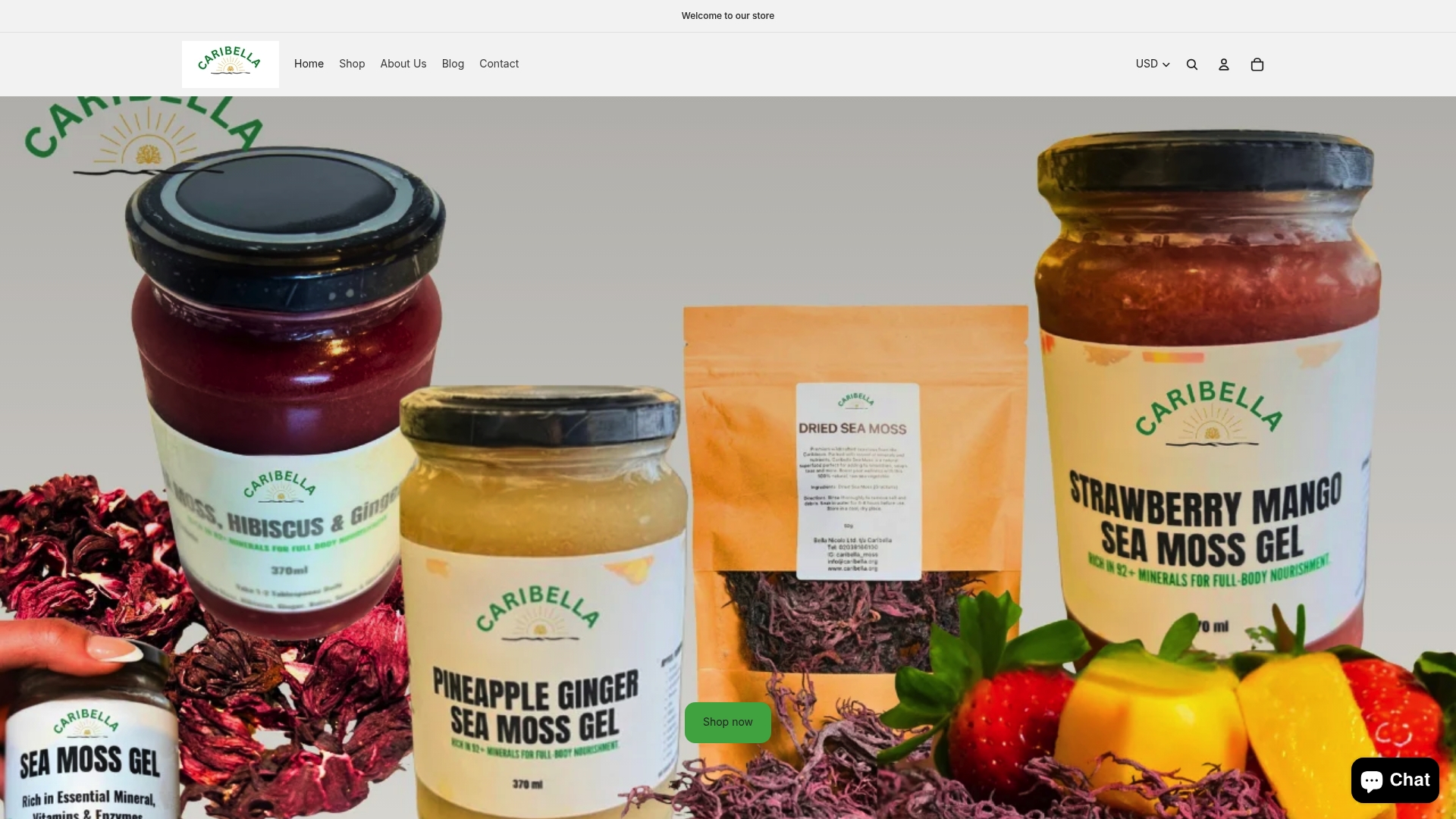
Our herbal tea collection offers thoughtfully blended options to support relaxation, digestion, and daily wellbeing. For women seeking targeted support, our hormone balancing capsules are formulated with care. And our sea moss gels bring Caribbean nourishment to your daily routine. As always, we encourage you to consult your healthcare professional before adding any new supplement to your routine.
Frequently asked questions
Are herbal supplements effective for menopause symptoms?
Clinical trials show limited evidence that herbal supplements meaningfully outperform placebo for menopause symptoms. NHS and BMS guidelines prioritise lifestyle modifications and medical treatments as first-line options.
What safety label should I look for on UK herbal supplements?
Look for the THR (Traditional Herbal Registration) mark. The THR mark confirms quality and safety standards have been met, but it does not confirm the product has been proven to work clinically.
Can herbal supplements interact with prescribed medication?
Yes, absolutely. Herbal supplements can interact with a range of prescription drugs and may be unsafe for women with liver disease, kidney conditions, or certain hormonal sensitivities. Always speak to your GP or pharmacist first.
Should women with a history of breast cancer use herbal supplements?
No. Women with a history of hormone-sensitive breast cancer should avoid phytoestrogen-containing herbs entirely, as avoidance is strongly advised due to potential interference with treatments like tamoxifen.
Recommended
- Herbal tea benefits: a guide for women over 40 – Caribella
- Herbal teas for gym-goers: energy and recovery, women 40+ – Caribella
- Herbal tea for energy: a guide for women over 40 – Caribella
- Herbal teas for menopause: evidence and top options – Caribella
- Дневни ритуали за продуктивност с натурални добавки – Neurofuel™️